
Why Direct Primary Care is Different: A Better Way to Experience Healthcare
A New Wave in Healthcare
Have you ever left a doctor's appointment thinking, "That was it?"
You waited two weeks for the appointment.
You took time off work.
You sat in the waiting room.
You finally saw the doctor for 10 or 15 minutes.
You had three things you wanted to discuss, but there was only enough time for one.
Then you received a bill you didn't quite understand.
And when you had another question a few days later, you discovered that getting an answer meant scheduling another appointment.
For many people, this has become so normal that they don't realize healthcare can work differently.
It can.
That's one of the reasons I chose to practice medicine through Direct Primary Care (DPC) at Waves Family Health.
A Different Kind of Doctor's Visit
Imagine a patient named Sarah.
Sarah has been having headaches. She also hasn't been sleeping well, has gained some weight, and has been feeling unusually tired.
She finally gets an appointment with her traditional primary care doctor.
The visit is scheduled for 15 minutes.
By the time the nurse checks her in, her medication list is reviewed, and the doctor walks into the room, precious minutes have already disappeared.
Sarah starts explaining everything that has been going on.
The doctor looks at the clock.
"Let's start with the headaches. We'll schedule another appointment to talk about the fatigue and weight gain."
Sarah leaves with a prescription and an order for some blood work.
But she still doesn't feel like anyone really listened.
Now imagine the same patient in a Direct Primary Care practice.
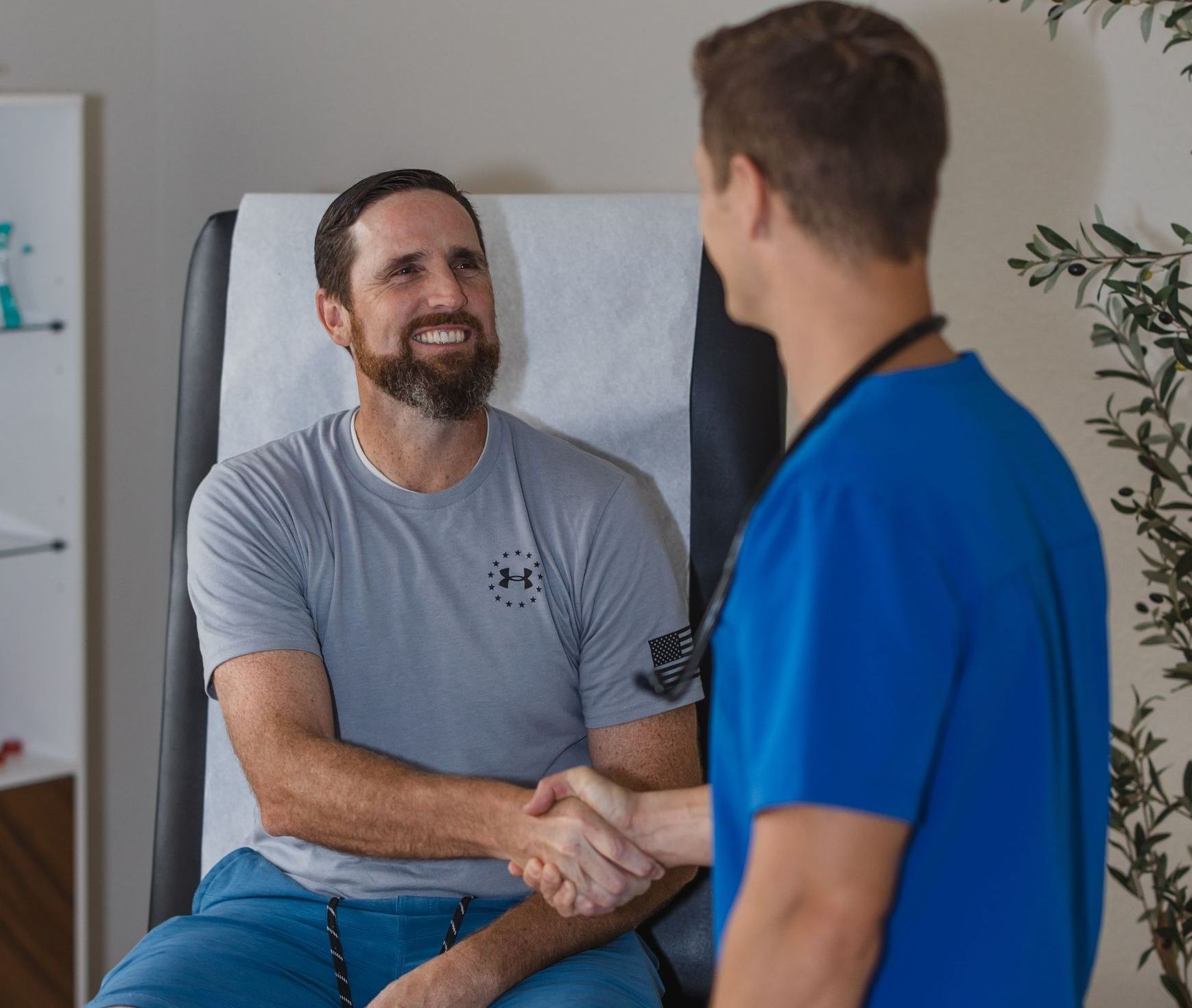
Instead of trying to squeeze everything into a few minutes, the physician has time to sit down with Sarah and actually listen.
The headaches may be discussed—but so are her sleep, stress, medications, nutrition, exercise, menstrual history, family history, and other factors that might be contributing to how she feels.
Maybe the answer is simple.
Maybe it requires laboratory testing.
Maybe there is something more serious that needs to be investigated.
The important difference is that the physician has time to figure it out.
That's what DPC is designed to do.
So What Exactly Is Direct Primary Care?
Direct Primary Care is a different way of paying for and delivering primary care.
Instead of your doctor's office billing your insurance company every time you walk through the door, you pay the practice a predictable monthly membership fee.
That membership provides access to a broad range of primary care services, depending on the individual DPC practice.
Because the practice isn't dependent on insurance reimbursement for every individual visit, the relationship between the doctor and patient can look very different.
The American Academy of Family Physicians recognizes that DPC can provide patients with greater access to their physician and more time together while reducing many of the administrative pressures associated with traditional fee-for-service medicine.
At Waves Family Health, the goal is simple:
Spend less time dealing with the healthcare system and more time actually taking care of your health.
1. You Don't Have to Wait Weeks to See Your Doctor
One of the most frustrating parts of traditional healthcare is simply getting an appointment.
You might call your doctor's office only to hear:
"The next available appointment is three weeks from now."
That's not particularly helpful when you're sick today.
DPC practices are intentionally structured around smaller patient panels, which allows the physician to offer greater access to the people they care for.
At Waves Family Health, patients can often receive same-day or next-day care when appropriate.
And sometimes, you don't need an office visit at all.
A question that might require a traditional appointment can sometimes be handled through a phone call, message, or virtual visit.
Healthcare should fit into your life—not require you to rearrange your life around healthcare.
2. You Get More Time With Your Doctor
Perhaps the biggest difference patients notice is time.
Traditional primary care often operates on a high-volume, fee-for-service model. The practice needs to see a large number of patients to keep the doors open.
DPC changes that equation.
Because the physician isn't being paid based on how many patients can be squeezed into a day, there is more freedom to slow down.
More time means you can actually finish your story.
It means you can ask questions.
It means your doctor can explain why a medication is being prescribed instead of simply handing you a prescription.
It means there is time to discuss prevention—not just whatever problem brought you into the office that day.
And sometimes, the most important information a doctor learns comes from the part of the conversation that wouldn't have fit into a 10-minute appointment.
3. Your Doctor Can Treat the Whole Person
Family medicine has always been about caring for the whole person.
But the traditional healthcare system can make that surprisingly difficult.
A patient might have high blood pressure, diabetes, anxiety, joint pain, obesity, and high cholesterol.
Instead of looking at the entire picture, healthcare can become a series of disconnected appointments:
One doctor manages the blood pressure.
Another manages the diabetes.
Another manages the joint pain.
A specialist manages something else.
And somehow, the patient is expected to coordinate everything.
A family physician is uniquely positioned to help connect those dots.
At Waves Family Health, we can look at the bigger picture and help coordinate care when specialists, imaging, or hospital-based care are needed.
Your health isn't divided into separate boxes. Your healthcare shouldn't be either.
4. Fewer Insurance Headaches
Insurance is valuable for many things—especially expensive and unexpected medical care.
But insurance isn't necessarily the best way to pay for every interaction with your primary care doctor.
Traditional insurance-based practices have to deal with claims, coding, prior authorizations, networks, reimbursement rules, and countless administrative requirements.
Those tasks consume time and resources.
DPC removes much of that complexity from routine primary care.
Instead of wondering:
"Is my doctor in network?"
"What's my copay?"
"Have I met my deductible?"
"How much is this visit going to cost?"
patients can have a much simpler relationship with their primary care practice.
You pay a predictable membership fee. You come in when you need care.
That's it.
5. Primary Care Can Actually Be Affordable
Healthcare doesn't have to be synonymous with expensive.
In fact, one of the surprising advantages of DPC is that routine primary care can be remarkably affordable.
Many DPC practices charge a predictable monthly membership rather than charging patients for every individual visit. The AAFP reports that DPC memberships commonly cover extended visits, care coordination, and comprehensive primary care services, although exactly what is included varies by practice.
At Waves Family Health, our goal is to make high-quality primary care accessible without the confusing bills that often accompany traditional healthcare.
We also work to provide transparent cash pricing for services such as laboratory testing and imaging whenever possible.
You should know what your healthcare costs.
6. You Get a Relationship With Your Doctor
This may be the most important benefit of all.
Healthcare works better when your doctor knows you.
Not just your name.
Your history.
Your family.
Your goals.
Your medications.
Your struggles.
What has worked in the past.
What hasn't.
What you're worried about.
Over time, that relationship becomes incredibly valuable.
When something changes, your physician has context.
When you're sick, you don't have to start from scratch explaining your entire medical history to someone you've never met.
And when you're healthy, your doctor can help you stay that way.
That's what primary care was meant to be.
DPC Isn't About Getting Rid of Health Insurance
This is an important distinction.
Direct Primary Care is not health insurance.
DPC is designed to provide your primary care directly, while health insurance can still be used for things outside the scope of the practice, such as major hospitalizations, emergencies, specialty care, and other expensive medical needs.
Think of it this way:
Your insurance protects you from catastrophic medical expenses.
Your DPC membership gives you a doctor you can actually access when you need one.
For many people—especially those with high-deductible health plans—that combination can make a lot of sense.
Healthcare Should Feel Personal Again
The healthcare system has become incredibly complicated.
There are insurance companies, hospital systems, billing departments, networks, prior authorizations, deductibles, copays, portals, phone trees, and paperwork.
Some of those things are necessary.
But your relationship with your doctor doesn't have to be complicated.
Direct Primary Care takes a step back toward something much simpler:
You. Your doctor. A relationship.
At Waves Family Health, I believe that good medicine starts with listening.
It starts with having enough time to understand what's really going on.
It means treating illness when you're sick—but also helping you prevent illness before it happens.
It means having a physician who knows you and who you can actually reach.
And it means creating a healthcare experience where you don't feel like a number moving through a system.
You deserve a doctor, not just a doctor's appointment.
That's the idea behind Direct Primary Care.
And that's why I built Waves Family Health.